Sale-leaseback 101
What it is, why it’s advantageous and when to execute
What is a sale-leaseback?
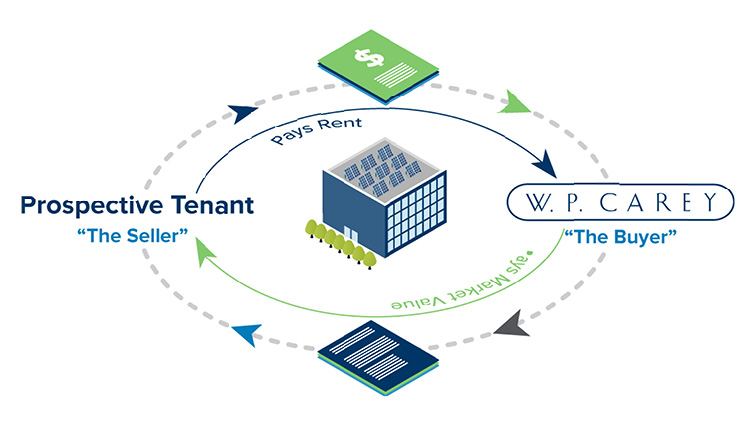
The concept is simple. For many companies, their real estate represents a significant cash value that could be redeployed to fund their core business operations and growth strategies. Through the “sale and leaseback” model (or sale-leaseback), a company sells its real estate to an investor for cash and simultaneously enters into a long-term lease with the new owner. In doing so, the seller extracts 100% of the property’s value and converts an otherwise illiquid asset into working capital, while maintaining full operational control of the facility.

What are the benefits?
There are many reasons why a company would consider monetizing its owned real estate. Sale-leasebacks offer companies an alternative to traditional bank financing. This is particularly advantageous during periods of uncertainty—as seen during COVID-19 when conventional financing was limited, especially for sub-investment grade companies.
Whether a company is looking to invest in R&D, expand into a new market, fund an M&A transaction or simply de-lever, sale-leasebacks serve as a strategic capital allocation tool to fund both internal and external growth in all market conditions.
Key benefits include:
- Immediate access to capital to reinvest in core business operations and growth initiatives with higher equity returns. We like to say that most businesses are not in the business of owning real estate. A sale-leaseback enables companies to focus on its core competencies, while capitalizing on the value arbitrage between the real estate valuation and the company’s EBITDA multiple.
- 100% market value realization of otherwise illiquid assets compared to the 65% to 75% of the appraised value that a typical mortgage would garner.
- Limited financial covenants, unlike some debt instruments, providing the seller with greater control over its operations.
- Alternative capital source when conventional financing is unavailable or limited.
- Retainment of operational control with no disruption to day-to-day operations.
- Potential tax benefits by deducting rental payments rather than being subject to interest limitations for traditional debt as defined by tax laws.
Why now?
Record level dry power, coupled with today’s low interest rate environment continue to drive investor demand for alternative investments such as real estate, pushing property values to all-time highs. These conditions make now an opportune time for sellers to maximize their proceeds and secure favorably priced, long-term capital via a sale-leaseback before interest rates rise again.
In conclusion
Key to the success of a sale-leaseback arrangement is finding an experienced and well-capitalized investor who can understand the unique requirements of each seller and structure the lease accordingly. When working with an investor like W. P. Carey, sellers have the added advantage of gaining a long-term partner who can support its tenants through long-term flexibility and additional capital should they wish to pursue follow-on projects such as expansions or energy retrofits as their business and real estate needs evolve.
Related Topics:
You May Also Like:

Where Opportunity Exists in European Real Estate Today
As the European real estate industry gathers in Munich for EXPO REAL, investors are navigating a market defined by both uncertainty and evolving opportunities. While sentiment remains cautious amid ongoing economic and geopolitical challenges, opportunities continue to emerge for investors with disciplined underwriting and a long-term perspective. Here are four key themes we expect to shape conversations at this year's conference. Economic challenges persist in Germany, but defense spending could create new opportunities Compared with last year’s conference, the mood in Germany is likely to be more subdued. Europe's largest economy continues to face a range of challenges, including weaker industrial activity, geopolitical uncertainty and lingering concerns around inflation and interest rates. At the same time, increased defense spending across Germany and Europe could create an important counterbalance to some of these challenges. As governments commit more capital to defense, security and strategic manufacturing capabilities, demand for specialized industrial facilities and production infrastructure could increase. This investment has the potential to support certain manufacturing sectors, create new occupier demand and generate opportunities for real estate investors. Macroeconomic conditions will remain the dominant investment driver Macroeconomic conditions will continue to play a central role in real estate investment decisions across Europe over the next 12 to 18 months. While many investors had anticipated a more accommodative financing environment, recent rate hikes by the European Central Bank and the rise in long-term interest rates have added a new layer of complexity to the market. As a result, real estate investors remain focused on how financing costs, capital availability and geopolitical developments could influence property values and transaction activity across Europe. Periods of uncertainty can create selective opportunities, but disciplined underwriting and a long-term outlook remain critical for investors when evaluating new investments. Sale-leaseback activity will continue to grow Despite broader market uncertainty, the outlook for the European sale-leaseback market remains positive. As companies look for ways to strengthen balance sheets, improve liquidity and fund strategic initiatives, sale-leasebacks continue to offer a compelling source of capital. Private equity sponsors are similarly exploring sale-leasebacks as a tool to unlock value, support acquisition financing and optimize capital structures. While a significant inflationary or interest-rate shock could have a short-term impact, the broader trend points toward increased activity. As financing costs remain elevated and capital efficiency becomes more important for companies, sale-leasebacks are expected to remain a valuable financing solution across a variety of sectors. AI is reshaping real estate, but key questions remain Artificial intelligence continues to drive enormous interest in data centers and digital infrastructure. However, alongside the enthusiasm, important questions remain. Energy availability is emerging as one of the sector's biggest constraints. Across many European markets, power capacity is becoming increasingly difficult to secure, creating a bottleneck for future development. At the same time, investors are still evaluating how these assets should be valued over the long term. Rapid technological evolution, equipment depreciation and uncertainty around residual asset values create questions that have yet to be fully answered by the market. This may place a premium on assets and markets with reliable access to power and infrastructure capable of supporting future demand. Looking ahead Success in the current landscape will not be defined by predicting the next market shift, but by identifying opportunities that can withstand it. In an environment marked by uncertainty, investors focused on high-quality tenants, mission-critical real estate and creative capital solutions such as sale-leasebacks will be well positioned to take advantage of emerging opportunities.

How E-Commerce Is Shaping Supply Chains and Driving Demand for Logistics Real Estate
While the pandemic-era surge in online shopping has moderated, e-commerce remains one of the most powerful forces influencing logistics real estate. Consumer purchasing habits have fundamentally changed, with digital channels now firmly embedded in how people shop. As retailers, manufacturers and logistics providers adapt to rising expectations for speed, convenience and flexibility, the need for modern fulfillment infrastructure continues to expand. The result is a logistics landscape that is becoming increasingly sophisticated, with occupiers reevaluating distribution networks to better serve a digital-first economy. Logistics Has Become Critical to the E-Commerce Experience E-commerce has matured from a fast-growing retail channel into a foundational component of global commerce. According to a recent McKinsey survey, 57% of consumers rank digital as their primary purchasing channel—almost double the level reported in 2022. For retailers, this shift has significant supply chain implications. Fulfillment networks are being redesigned to support broader product assortments, deeper inventory levels, direct-to-consumer shipping, returns processing, and value-added services such as product assembly and customization. Real estate strategy is also becoming more closely tied to service levels. Facilities positioned near major population centers can help shorten delivery windows and improve the efficiency of last-mile logistics—the final stage of the delivery process, when goods move from a distribution facility to the end customer. As consumers continue to expect faster, more reliable delivery, this part of the supply chain has become a key competitive differentiator. Nearshoring Is Providing an Additional Tailwind Companies are increasingly pursuing nearshoring and onshoring initiatives to improve supply chain resilience, reduce transportation costs and bring production closer to end markets. These strategies gained momentum following years of supply chain disruptions and continue to be influenced by evolving trade policies and geopolitical considerations. Unlike last-mile strategies, which focus on the final movement of goods, nearshoring is reshaping the upstream side of the supply chain. By moving production closer to end markets, companies can improve operational control, reduce exposure to disruption and better align inventory with customer demand. In the U.S., changes in foreign trade policies and tariff structures have further encouraged companies to diversify sourcing strategies and establish a stronger domestic presence. Cross-border e-commerce companies, in particular, are expanding their U.S. logistics footprints to help future-proof operations amid potential regulatory changes. As new manufacturing facilities come online, the need for supporting warehouse, distribution and transportation infrastructure is expected to increase, creating additional opportunities within industrial and logistics real estate. A New Era for Logistics Real Estate It’s projected that U.S. e-commerce penetration—the percentage of total retail sales that occurs online—will rise from approximately 24% in 2025 to 30% by 2030. This growth has meaningful implications for logistics real estate demand, as every one percentage-point increase in e-commerce's share of retail sales translates into approximately 50 million to 70 million square feet of industrial space absorption. Beyond sheer volume growth, e-commerce is also changing the type of industrial and logistics space occupiers require. To support greater supply chain flexibility, companies are increasingly seeking modern facilities with higher clear heights, advanced automation capabilities and strong transportation connectivity. Looking Ahead E-commerce is no longer just changing how consumers shop—it is reshaping how companies build, operate and future-proof their supply chains. Well-located, modern facilities with the flexibility to support evolving distribution strategies are likely to remain in high demand, underscoring the long-term value of logistics assets in a digital-first economy.

Sale-leasebacks Earn a Bigger Role in Capital Strategies
Corporate operators and private equity sponsors are increasingly using sale-leasebacks in their capital strategies, whether to fund acquisitions, manage costs, or improve their balance sheet position. When companies own significant real estate, this structure provides access to the full property value without disrupting operations, says Zachary Pasanen, managing director and co-head of North American investments at W. P. Carey. "Companies often have significant capital tied up in real estate, so a sale-leaseback allows them to monetize the real estate fully, lock in a very long-term contract, and fix their rent for a sustained period of time," Pasanen says, adding that proceeds are commonly used to shore up balance sheets, fund growth initiatives, pay down expensive debt, or address near-term obligations coming due. As more companies weigh their options for unlocking the value of their real estate, the structure's appeal comes down to how well it fits broader capital goals. Private Equity Sponsors Find Value in the Multiple Gap Private equity firms have become steady users of sale-leasebacks to finance corporate acquisitions, Pasanen notes. This structure provides an opportunity to capture value from the gap between the real estate multiple and the acquisition multiple. "You can often find strong accretion by utilizing the sale-leaseback," Pasanen says. He adds that prudent CFOs and sponsors are factoring it into M&A strategies as an additional way to capitalize acquisitions. Corporate operators are also using this structure for other balance sheet purposes. For example, companies looking to pay down near-term or expensive debt may apply sale-leaseback proceeds while maintaining operational control of their facility. "The way we structure a lease gives them effectively the same controls they had when they owned the facility," Pasanen says. He explains that tenants can make alterations within reason, and they remain responsible for taxes, maintenance and insurance, much as they were before the deal closed. Pasanen also notes that W. P. Carey is a long-term capital partner to its tenants and can support their real estate needs as they evolve, with the ability to finance expansions, renovations or energy retrofits at their leased properties. Capital Flows In as Appetite Stays Strong Companies holding real estate often find the structure attractive because it helps them unlock a property's full market value. Pasanen notes that mortgage financing, by contrast, typically returns around 50 to 70 cents on the dollar. Corporate demand for sale-leasebacks is met by a market with no shortage of capital supporting it. Pasanen expects the sale-leaseback market to remain active, noting that a growing pool of investors are entering the space. For specialized facilities where tenants have invested heavily and relocation is expensive, Pasanen says investor demand remains particularly strong. This suggests the structure will remain a viable option, particularly for companies whose real estate is critical to their operations.