Forging Long-term Partnerships Through Tenant-centered Real Estate Solutions
W. P. Carey’s approach to build-to-suits, redevelopments and energy solutions
At W. P. Carey, we view real estate as a long‑term partnership — not a one‑time transaction. We stay closely connected with our tenants, aligning our capital and real estate expertise with the evolving needs of their businesses.
That philosophy is embedded in Carey Tenant Solutions™, our platform designed to support tenant growth beyond the initial acquisition. Through follow‑on investments, we help tenants modernize, expand, redevelop, relocate and improve the energy efficiency of their facilities — allowing them to focus capital on what matters most: running and scaling their core business.
Below is an overview of the core capabilities within Carey Tenant Solutions and how each can benefit existing and prospective tenants.
Build-to-suits
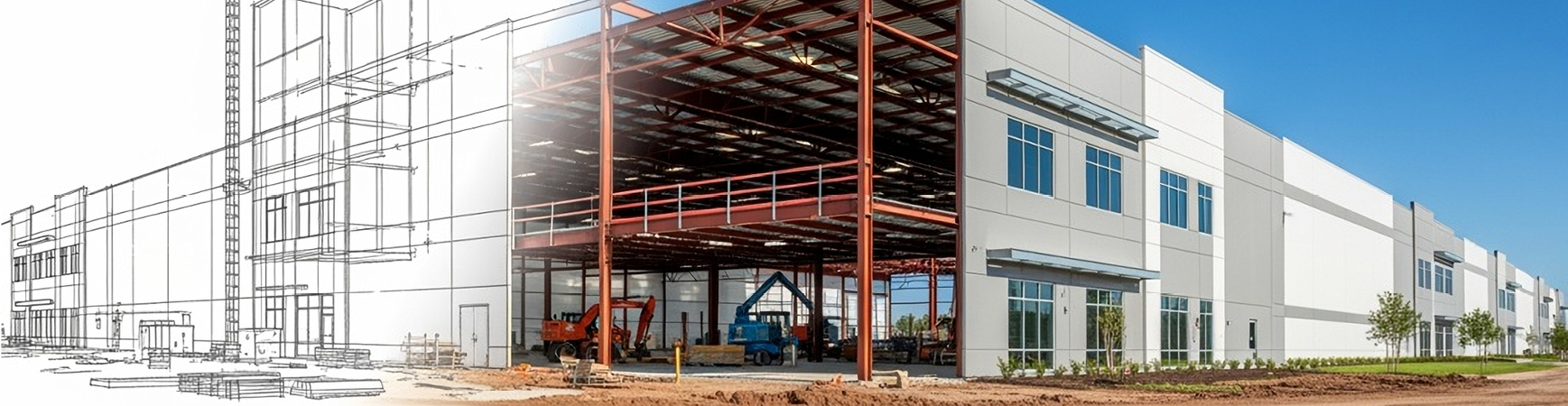
In a build‑to‑suit, W. P. Carey funds and manages the construction of a new facility — or the expansion of an existing one — tailored to the precise specifications of a prospective or existing tenant. Upon completion, the tenant enters into a long‑term net lease while retaining full operational control of the new or expanded facility.
We offer two flexible approaches to build‑to‑suits:
- Build-to-suit financing: We provide construction capital while the tenant’s developer executes the project, either through traditional construction financing funded over time or via take‑out financing upon completion.
- Turnkey build-to-suit: We finance and manage the entire construction process, from site selection to final delivery.
For tenants, the primary advantage of a build‑to‑suit is capital efficiency. Rather than tying up their capital in real estate, tenants can redeploy resources toward growth initiatives, innovation or strengthening operations — while still gaining a facility designed specifically for their needs.
Learn how this approach helped support our tenant Cuisine Solutions’ growth.
Redevelopments
W. P. Carey offers comprehensive redevelopment capabilities, managing projects from initial design through delivery. Combining our internal development expertise and long‑standing relationships with leading architects, consultants and contractors, we assemble experienced teams capable of executing even the most complex redevelopment projects.
Our redevelopment capabilities span:
- Repositionings, where we upgrade, modernize or expand an existing building while maintaining its core use.
- Redevelopments, which involve unlocking value of infill locations through adaptive reuse and ground up construction of state-of-the-art, primarily industrial, properties that meet the demands of modern occupiers.
W. P. Carey’s turnkey redevelopment process is comprehensive and includes:
- Pre-construction planning and optimization
- Development feasibility and due diligence
- Zoning and entitlement approvals
- Design and permitting
- Budgeting and scheduling
- Construction management
- Creative lease structures
- Sustainable development
- Overall efficiency
Our proactive approach allows us to work directly with incoming tenants to shape a property around their exact operational requirements, while enhancing the quality of our portfolio by retaining the best positioned assets in the highest barrier-to-entry locations.
Learn more about our carbon-neutral redevelopment of a Class-A warehouse for a global IT services company.
Energy Solutions
Through Carey Tenant Solutions, we also help tenants reduce operating costs and advance their sustainability goals by designing, funding and implementing renewable power and energy efficiency projects directly at their facilities.
We believe that improving the quality and sustainability of our assets delivers tangible benefits across our portfolio — increasing renewal probabilities, strengthening tenant relationships and enhancing long‑term asset value – all while helping our tenants reduce their carbon footprint.
Our energy solutions include:
- On‑site renewables, including CareySolar®
- Efficiency retrofits, such as LED lighting upgrades
- Smart building technologies, including IoT‑enabled metering
- Green infrastructure, such as EV charging stations and battery storage
- Carbon‑neutral construction
By integrating these solutions into our long‑term ownership strategy, we help tenants operate more efficiently today while building assets that are better positioned for the future.
Read how we collaborated with our tenant, a healthcare products distributor, to fund a rooftop solar installation.
A Platform Built on Partnership
Collaboration with our tenants — and support beyond the initial transaction — has always been core to how we operate at W. P. Carey. With Carey Tenant Solutions, we have formalized and unified those capabilities, bringing decades of experience together under a single platform to deliver one of the most comprehensive tenant service offerings in the net lease industry.
Interested in exploring Carey Tenant Solutions? Get in touch today.

Related Topics:
You May Also Like:

Tenant Partnerships – The Road to a Sustainable Future
As Climate Week NYC approaches, the spotlight on sustainability is brighter than ever. For companies across industries, the annual event underscores the urgent need to address climate change. The real estate sector, estimated to be responsible for nearly 40% of global carbon emissions, plays a critical role in advancing this worldwide effort. At W. P. Carey, we recognize our potential to drive meaningful impact in the fight against climate change through our extensive portfolio of over 1,200 net lease properties. While the net lease model means our tenants have full operational control of their properties, we are committed to collaborating with them to achieve shared sustainability goals and enhance the quality of our properties. Here’s how: Gaining insights through data Collecting detailed energy data remains a core focus for us. Collaborating with our tenants to install IoT smart meter systems provides both us and our tenants access to high-quality utility data for their leased properties. This data can be utilized to assess energy usage for regulatory compliance as well as voluntary reporting. It also enables us to calculate the carbon footprint of our portfolio and identify opportunities to implement energy-saving measures at our properties. In 2023, we began a smart meter installation program with our European tenants, making the process more efficient for both W. P. Carey and our tenants while also reducing the risk of data errors. Renewable energy opportunities Renewable energy can reduce building operating costs and lower carbon emissions. One of the most accessible sources of renewable energy is solar power, which can be harnessed through the installation of solar panels. Particularly given the roof space that our industrial and warehouse assets provide, we believe we have a large addressable market for solar. Through W. P. Carey’s CareySolar® program, tenants have the opportunity to take advantage of rooftop and carport solar installations at their leased properties through a broad array of structures. These include: Landlord-operated Landlord-financed Tenant projects Rooftop leases W. P. Carey collaborates with each tenant to understand their current energy usage and determine the ideal solar solution for their unique property. In 2023, W. P. Carey extended the lease term with an existing tenant for their 265,000-square-foot industrial facility in Illinois. Simultaneously, we signed a 15-year power purchase agreement where we plan to build a 1,350-kilowatt roof mounted solar system that would offset 740 metric tons of CO2 annually. We will manage and fund the construction of the system and sell the power generated by the system to the tenant. Building energy retrofits Implementing sustainable features to improve energy efficiency has a huge impact on a property’s life-cycle emissions. W. P. Carey can do this through property-specific energy retrofits. An example of an energy retrofit is the installation of LED lighting. LED lights are 80% to 90% more energy efficient than other light bulbs and do not contain any environmentally hazardous materials. Additionally, LEDs last up to 25 times longer than traditional incandescent bulbs. In 2023, W. P. Carey completed a full LED retrofit at our 1.5 million-square-foot warehouse in University Park, Illinois. The LED project is expected to result in a 35% reduction in lighting electricity usage and 41% reduction in utility and maintenance bills at the property. Following the completion of the retrofit, we leased the property to Samsung for a term of 10.5 years. Green-building certifications Green-building certifications such as LEED and BREEAM can provide many benefits for both landlords and tenants. Achieving a green-building certification means that a property meets certain sustainability requirements across a variety of categories including energy, air quality and water usage. Certified buildings are typically more energy and cost efficient and create healthier work environments for employees. In addition to being more environmentally friendly, green-certified buildings can offer tax benefits. Many states offer tax incentives for green building projects, based on either energy savings or reaching a certain level of certification. Real estate studies have also shown that green buildings sell and lease faster than traditional buildings, and garner higher rents and lease rates. At W. P. Carey, we’re committed to achieving green-building certifications where we can, and our portfolio includes 6.6 million square feet of green-certified buildings as of June 30, 2024. In 2024, our state-of-the-art food research facility in the Netherlands received a BREEAM Outstanding certification, the highest level of BREEAM certification for buildings worldwide. Conclusion Reducing the carbon footprint of a net lease portfolio is an enormous challenge, but by bolstering tenant engagement and systematically identifying sustainability opportunities, progress is possible. Sustainable real estate is beneficial to the planet, attractive to tenants and improves the value of our broader portfolio, making it a win-win-win for all.

Why Tenant-Landlord Relationships Matter
Since our founding in 1973, W. P. Carey has been a long-term partner to our tenants. This means that when we invest in a property, we are also committed to advancing the tenant’s business and look to support their evolving real estate and capital needs throughout the duration of their lease and beyond. A Long-term Partner: Building Beyond the Original Transaction W. P. Carey partnered with Sonae MC, a leading Portuguese food retailer, in 2018 when it acquired its mission-critical warehouse facility in the Azambuja logistics park, Portugal’s prime logistics hub outside of Lisbon. Since its founding in 1985, Sonae MC has steadily grown its market share. Today, the company has more than 1,300 stores throughout Portugal and Spain, 35,000 employees and a broad range of products and services. At the time of the acquisition, Sonae MC was experiencing rapid growth, particularly through its city-center convenience stores and e-commerce operations. In order to meet rising demand and continue executing on its strategic plans, the company needed additional food distribution warehouse space. “In recent years, Sonae MC has been expanding its store portfolio, mostly with small, convenience stores; in the last decade, 750 new stores were opened. This growth will continue for the next few years to solidify even more of our dominant market share. This means our company’s logistics operation has to continue growing its warehouse footprint to be able to receive, prepare and ship an ever-growing number of merchandise," explained Rui Braz, Head of Area – Logistics Development at Sonae MC. To support Sonae MC’s growing business, W. P. Carey partnered with the company and agreed to fund a $28 million expansion of the Azambuja facility. Completed in 2020, the 300,000-square-foot expansion was custom built to Sonae MC’s specifications and totaled over 840,000 square feet, making it the largest refrigerated warehouse in Portugal. With the additional space, Sonae MC was able to increase its capacity and speed of supply to Mainland stores in the central and southern regions of Portugal. “The Azambuja expansion was part of a plan to strengthen our logistic capability, which makes it a fundamental piece to the company’s strategy,” said Braz. A Shared Vision: Committing to a Greener Future Our ability to support our tenants’ real estate needs goes beyond just expansions. We can also partner with our tenants on projects to help reduce their carbon footprint and meet their sustainability goals. W. P. Carey and Sonae MC are both committed to creating a greener future, which meant the expansion of the Azambuja warehouse was built with sustainability in mind. In 2021, a solar roof generating an estimated 4,000 MWh/year was successfully installed on the newly expanded facility, earning a LEED Gold certification for the property. This makes the facility Portugal’s first LEED Gold certified warehouse, an exciting milestone for W. P. Carey, Sonae MC and the country as a whole. “Receiving a LEED Gold certification for our new building in Azambuja, being the first in Portugal and, on top of that, the first for a refrigerated warehouse, is an important acknowledgement of our focus on sustainability. The thought that was put into multiple aspects like the isolation of the building, rainwater utilization system, and the investment in the photovoltaic solar plant–that reduces 30% of our electrical power grid needs for the entire facility–clearly portrays our intention in diminishing the operation’s environmental footprint,” Braz added. The new building is also equipped with innovative cooling and insulation systems that are more energy efficient and environmentally friendly. The joint delivery of fresh produce allows 20% fewer deliveries to shops, a reduction of 1.4 million km traveled per year and the equivalent of 1,100 tons of CO2 saved per year. A Win-Win: Long-term Benefits for Both Tenant and Landlord W. P. Carey prides itself on serving as a long-term, flexible partner to its tenants. By building strong relationships we are able to not only understand the business objectives of each tenant, but also their unique corporate values. In the case of Sonae MC, we were thrilled to have the opportunity to support them and their business needs, while also advancing our goal of reducing the carbon footprint of our overall portfolio. “W. P. Carey has had a fundamental role in the development of this project, proving to be the right partner along the entire process of building this warehouse and its sustainability and efficiency features, which we’re all proud of,” Braz concluded.

Project Management Teams Deliver Big Value for Tenants
There’s no question that the current real estate development market is challenging. Labor shortages and rising material costs are creating hurdles in the construction industry, which is being compounded by limited inventory of vacant real estate for certain property types, leaving companies with very few options for additional square footage or property upgrades. The good news is that companies that lease their building may be in luck thanks to a high-value service some landlords are offering: a dedicated project management team. Project management teams come in all shapes and sizes, but they have the potential to handle all types of development projects (e.g., expansions, renovations and build-to-suits) as well as deliver turnkey solutions. REITs and other longer-term investors will often invest in these teams, priding themselves on being a partner to their tenants for the duration of the lease and beyond. Project management teams manage everything from conceptual planning to design to construction management, assembling a team of architects, consultants and contractors. This holistic service is particularly valuable since most tenants don’t have the resources—be it the capital, relationships or expertise—to execute these projects themselves. And leveraging their landlord’s project management team is often more efficient and cost-effective than hiring a third-party developer, and enables them to focus on their core business, which is most likely not real estate development. In today’s market, having access to a dedicated project management team with a shared interest in their tenant’s business and the expertise to effectively navigate current challenges is more valuable than ever. Here’s why: Renovate, modernize or convert an existing building Project management teams can adapt an existing building to reflect the tenant’s evolving real estate needs. This could encompass a full renovation and modernization of an outdated building or converting one property type to another (e.g., office to R&D) to reflect a changing business model. Moreover, with prices continuing to increase having a project management partner that can finance the upfront costs associated with these projects is critical. In addition, working with a project management team that understands the ins and outs of a tenant’s business along with being able to offer a tailored approach means the final product will be ideally suited to the tenant’s long-term needs, in comparison to if the tenant worked with a third-party developer. Expand an asset to accommodate a need for more space In order to continue growing, many tenants need to expand their real estate footprint to make room for more equipment, inventory and more. However, record-low availability of real estate means that many tenants can’t find the additional space they need. An in-house project management team can help by working with tenants to expand their existing space to accommodate growing business needs. A huge benefit of this approach is that tenants can typically continue operating in their existing facilities during an expansion, offering minimal disruption to day-to-day operations. Retrofit an existing space to make it more sustainable With energy costs continuing to soar, there’s never been a better time for tenants to update their properties to make them more sustainable. In-house project management teams can work on a variety of sustainability projects including renewable energy opportunities – such as solar panel installations – energy efficiency retrofits and green building certifications. These sustainable projects can reduce tenants operating costs and help reduce scope 1 and 2 emissions to align with their sustainability goals. Conclusion For landlords, investing in a project management team is a win-win. Turnkey project management solutions add value for tenants by adapting their property to meet their long-term needs, helping increase lease renewals while also improving the overall quality of the portfolio. From an investment perspective, having a project management team also provides a steady pipeline of attractive internal investment opportunities, while enabling the landlord to have project oversight on deals where they are also serving as the capital provider.