Why Tenant-Landlord Relationships Matter
W. P. Carey works with tenant Sonae MC to support their growing business
Since our founding in 1973, W. P. Carey has been a long-term partner to our tenants. This means that when we invest in a property, we are also committed to advancing the tenant’s business and look to support their evolving real estate and capital needs throughout the duration of their lease and beyond.
A Long-term Partner: Building Beyond the Original Transaction
W. P. Carey partnered with Sonae MC, a leading Portuguese food retailer, in 2018 when it acquired its mission-critical warehouse facility in the Azambuja logistics park, Portugal’s prime logistics hub outside of Lisbon. Since its founding in 1985, Sonae MC has steadily grown its market share. Today, the company has more than 1,300 stores throughout Portugal and Spain, 35,000 employees and a broad range of products and services.
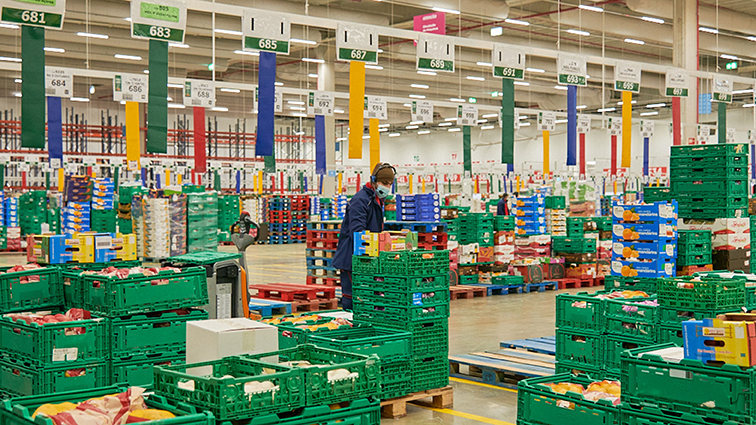
At the time of the acquisition, Sonae MC was experiencing rapid growth, particularly through its city-center convenience stores and e-commerce operations. In order to meet rising demand and continue executing on its strategic plans, the company needed additional food distribution warehouse space.
“In recent years, Sonae MC has been expanding its store portfolio, mostly with small, convenience stores; in the last decade, 750 new stores were opened. This growth will continue for the next few years to solidify even more of our dominant market share. This means our company’s logistics operation has to continue growing its warehouse footprint to be able to receive, prepare and ship an ever-growing number of merchandise," explained Rui Braz, Head of Area – Logistics Development at Sonae MC.
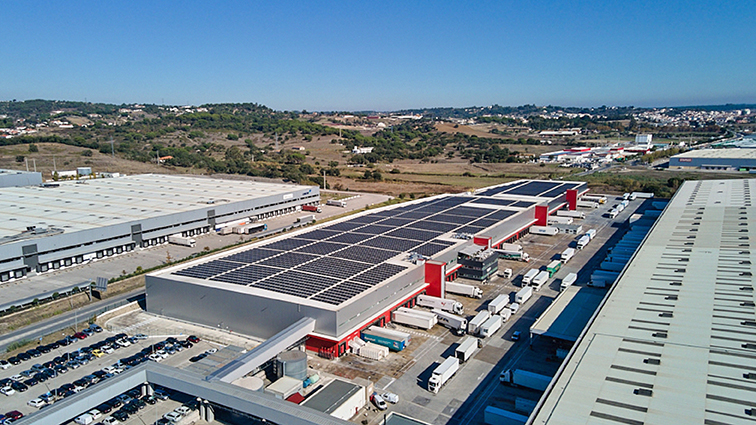
To support Sonae MC’s growing business, W. P. Carey partnered with the company and agreed to fund a $28 million expansion of the Azambuja facility. Completed in 2020, the 300,000-square-foot expansion was custom built to Sonae MC’s specifications and totaled over 840,000 square feet, making it the largest refrigerated warehouse in Portugal. With the additional space, Sonae MC was able to increase its capacity and speed of supply to Mainland stores in the central and southern regions of Portugal.
“The Azambuja expansion was part of a plan to strengthen our logistic capability, which makes it a fundamental piece to the company’s strategy,” said Braz.
A Shared Vision: Committing to a Greener Future
Our ability to support our tenants’ real estate needs goes beyond just expansions. We can also partner with our tenants on projects to help reduce their carbon footprint and meet their sustainability goals.
W. P. Carey and Sonae MC are both committed to creating a greener future, which meant the expansion of the Azambuja warehouse was built with sustainability in mind. In 2021, a solar roof generating an estimated 4,000 MWh/year was successfully installed on the newly expanded facility, earning a LEED Gold certification for the property. This makes the facility Portugal’s first LEED Gold certified warehouse, an exciting milestone for W. P. Carey, Sonae MC and the country as a whole.
“Receiving a LEED Gold certification for our new building in Azambuja, being the first in Portugal and, on top of that, the first for a refrigerated warehouse, is an important acknowledgement of our focus on sustainability. The thought that was put into multiple aspects like the isolation of the building, rainwater utilization system, and the investment in the photovoltaic solar plant–that reduces 30% of our electrical power grid needs for the entire facility–clearly portrays our intention in diminishing the operation’s environmental footprint,” Braz added.
The new building is also equipped with innovative cooling and insulation systems that are more energy efficient and environmentally friendly. The joint delivery of fresh produce allows 20% fewer deliveries to shops, a reduction of 1.4 million km traveled per year and the equivalent of 1,100 tons of CO2 saved per year.
A Win-Win: Long-term Benefits for Both Tenant and Landlord
W. P. Carey prides itself on serving as a long-term, flexible partner to its tenants. By building strong relationships we are able to not only understand the business objectives of each tenant, but also their unique corporate values. In the case of Sonae MC, we were thrilled to have the opportunity to support them and their business needs, while also advancing our goal of reducing the carbon footprint of our overall portfolio.
“W. P. Carey has had a fundamental role in the development of this project, proving to be the right partner along the entire process of building this warehouse and its sustainability and efficiency features, which we’re all proud of,” Braz concluded.
Related Topics:
You May Also Like:

Where Opportunity Exists in European Real Estate Today
As the European real estate industry gathers in Munich for EXPO REAL, investors are navigating a market defined by both uncertainty and evolving opportunities. While sentiment remains cautious amid ongoing economic and geopolitical challenges, opportunities continue to emerge for investors with disciplined underwriting and a long-term perspective. Here are four key themes we expect to shape conversations at this year's conference. Economic challenges persist in Germany, but defense spending could create new opportunities Compared with last year’s conference, the mood in Germany is likely to be more subdued. Europe's largest economy continues to face a range of challenges, including weaker industrial activity, geopolitical uncertainty and lingering concerns around inflation and interest rates. At the same time, increased defense spending across Germany and Europe could create an important counterbalance to some of these challenges. As governments commit more capital to defense, security and strategic manufacturing capabilities, demand for specialized industrial facilities and production infrastructure could increase. This investment has the potential to support certain manufacturing sectors, create new occupier demand and generate opportunities for real estate investors. Macroeconomic conditions will remain the dominant investment driver Macroeconomic conditions will continue to play a central role in real estate investment decisions across Europe over the next 12 to 18 months. While many investors had anticipated a more accommodative financing environment, recent rate hikes by the European Central Bank and the rise in long-term interest rates have added a new layer of complexity to the market. As a result, real estate investors remain focused on how financing costs, capital availability and geopolitical developments could influence property values and transaction activity across Europe. Periods of uncertainty can create selective opportunities, but disciplined underwriting and a long-term outlook remain critical for investors when evaluating new investments. Sale-leaseback activity will continue to grow Despite broader market uncertainty, the outlook for the European sale-leaseback market remains positive. As companies look for ways to strengthen balance sheets, improve liquidity and fund strategic initiatives, sale-leasebacks continue to offer a compelling source of capital. Private equity sponsors are similarly exploring sale-leasebacks as a tool to unlock value, support acquisition financing and optimize capital structures. While a significant inflationary or interest-rate shock could have a short-term impact, the broader trend points toward increased activity. As financing costs remain elevated and capital efficiency becomes more important for companies, sale-leasebacks are expected to remain a valuable financing solution across a variety of sectors. AI is reshaping real estate, but key questions remain Artificial intelligence continues to drive enormous interest in data centers and digital infrastructure. However, alongside the enthusiasm, important questions remain. Energy availability is emerging as one of the sector's biggest constraints. Across many European markets, power capacity is becoming increasingly difficult to secure, creating a bottleneck for future development. At the same time, investors are still evaluating how these assets should be valued over the long term. Rapid technological evolution, equipment depreciation and uncertainty around residual asset values create questions that have yet to be fully answered by the market. This may place a premium on assets and markets with reliable access to power and infrastructure capable of supporting future demand. Looking ahead Success in the current landscape will not be defined by predicting the next market shift, but by identifying opportunities that can withstand it. In an environment marked by uncertainty, investors focused on high-quality tenants, mission-critical real estate and creative capital solutions such as sale-leasebacks will be well positioned to take advantage of emerging opportunities.

How E-Commerce Is Shaping Supply Chains and Driving Demand for Logistics Real Estate
While the pandemic-era surge in online shopping has moderated, e-commerce remains one of the most powerful forces influencing logistics real estate. Consumer purchasing habits have fundamentally changed, with digital channels now firmly embedded in how people shop. As retailers, manufacturers and logistics providers adapt to rising expectations for speed, convenience and flexibility, the need for modern fulfillment infrastructure continues to expand. The result is a logistics landscape that is becoming increasingly sophisticated, with occupiers reevaluating distribution networks to better serve a digital-first economy. Logistics Has Become Critical to the E-Commerce Experience E-commerce has matured from a fast-growing retail channel into a foundational component of global commerce. According to a recent McKinsey survey, 57% of consumers rank digital as their primary purchasing channel—almost double the level reported in 2022. For retailers, this shift has significant supply chain implications. Fulfillment networks are being redesigned to support broader product assortments, deeper inventory levels, direct-to-consumer shipping, returns processing, and value-added services such as product assembly and customization. Real estate strategy is also becoming more closely tied to service levels. Facilities positioned near major population centers can help shorten delivery windows and improve the efficiency of last-mile logistics—the final stage of the delivery process, when goods move from a distribution facility to the end customer. As consumers continue to expect faster, more reliable delivery, this part of the supply chain has become a key competitive differentiator. Nearshoring Is Providing an Additional Tailwind Companies are increasingly pursuing nearshoring and onshoring initiatives to improve supply chain resilience, reduce transportation costs and bring production closer to end markets. These strategies gained momentum following years of supply chain disruptions and continue to be influenced by evolving trade policies and geopolitical considerations. Unlike last-mile strategies, which focus on the final movement of goods, nearshoring is reshaping the upstream side of the supply chain. By moving production closer to end markets, companies can improve operational control, reduce exposure to disruption and better align inventory with customer demand. In the U.S., changes in foreign trade policies and tariff structures have further encouraged companies to diversify sourcing strategies and establish a stronger domestic presence. Cross-border e-commerce companies, in particular, are expanding their U.S. logistics footprints to help future-proof operations amid potential regulatory changes. As new manufacturing facilities come online, the need for supporting warehouse, distribution and transportation infrastructure is expected to increase, creating additional opportunities within industrial and logistics real estate. A New Era for Logistics Real Estate It’s projected that U.S. e-commerce penetration—the percentage of total retail sales that occurs online—will rise from approximately 24% in 2025 to 30% by 2030. This growth has meaningful implications for logistics real estate demand, as every one percentage-point increase in e-commerce's share of retail sales translates into approximately 50 million to 70 million square feet of industrial space absorption. Beyond sheer volume growth, e-commerce is also changing the type of industrial and logistics space occupiers require. To support greater supply chain flexibility, companies are increasingly seeking modern facilities with higher clear heights, advanced automation capabilities and strong transportation connectivity. Looking Ahead E-commerce is no longer just changing how consumers shop—it is reshaping how companies build, operate and future-proof their supply chains. Well-located, modern facilities with the flexibility to support evolving distribution strategies are likely to remain in high demand, underscoring the long-term value of logistics assets in a digital-first economy.

Sale-leasebacks: A Flexible Capital Solution Across the M&A Lifecycle
As private equity firms continue to navigate a dynamic M&A environment, access to capital is critical. One increasingly important tool in their toolkit is the sale-leaseback. By unlocking capital embedded in real estate, sale-leasebacks can support transactions at multiple stages of the deal lifecycle – from acquisition financing to post-close optimization. Below, we explore how private equity sponsors are leveraging sale-leasebacks both at the point of acquisition and after closing, with a recent transaction serving as a practical example. Strengthening the Capital Stack at Acquisition In competitive M&A processes, particularly in corporate carveouts or complex platform acquisitions, certainty of financing and speed of execution are critical differentiators. Sale-leasebacks can play a key role at this stage by serving as a complementary capital source within the transaction structure. Rather than relying solely on traditional debt or equity, private equity firms can incorporate a sale-leaseback to monetize a target company’s owned real estate as part of the acquisition financing. Because land and buildings tend to sell at higher valuations than the company itself, private equity firms can sell portfolio company real estate and rent it back under a long-term lease, thereby capturing a multiple arbitrage and blending up their initial purchase price multiple without necessarily contributing more equity themselves. Using a sale-leaseback at closing serves a number of benefits, including: Providing immediate funds to aid in maximizing purchase price to a Seller (and winning an auction) Reducing the required equity investment Lowering overall cost of funds or increasing overall financing duration from traditional financing sources In this way, sale-leasebacks serve not just as a financing tool, but as a competitive edge in winning and efficiently executing complex M&A transactions. Unlocking Value Post-Acquisition While executing a sale-leaseback at closing may often be optimal, for a number of reasons acquirors may prefer to wait until post-closing to pursue a sale-leaseback. Post-acquisition capital can be a way to fund additional acquisitions, repay expensive debt, or invest in incremental equipment or higher ROI opportunities. Once a private equity firm has acquired a business, monetizing owned real estate through a sale-leaseback allows the sponsor to: Recapture a portion of its initial equity investment Reallocate capital toward portfolio company growth initiatives, add-on acquisitions or operational improvements Replace shorter-term debt with long-duration leases with no refinancing risk Post-closing sale-leasebacks offer a number of advantages in optimizing a business where additional capital could be put to better use. Private equity firms can often benefit from evaluating their real estate portfolios to find untapped sources of capital to reinvest in their businesses. Case Study: GardenCore In May 2026, W. P. Carey completed the $400 million sale-leaseback of a 43-property manufacturing portfolio leased to GardenCore, a leading U.S. manufacturer of lawn and garden consumables. The deal was completed in conjunction with a private equity firm’s acquisition of the business as part of a corporate carveout. By incorporating the sale-leaseback into the capital stack, the sponsor was able to unlock value and reduce the acquisition purchase price, illustrating how sale-leasebacks can help facilitate complex M&A deals. A Strategic Lever for Private Equity As M&A activity continues to evolve, sale-leasebacks are increasingly becoming a core component of how private equity sponsors structure and optimize their acquisitions, transforming real estate from a passive asset into a strategic source of capital. With over $6 billion in private equity financing completed since 1973, W. P. Carey remains well positioned to support private equity firms in unlocking significant capital through sale-leasebacks. Get in touch today!