Flexible Solar Solutions Built Around Tenant Needs
How Carey Tenant Solutions helps tenants advance sustainability on their terms
As energy costs rise and decarbonization becomes an increasingly important business priority, many companies are exploring solar—but not every project looks the same.
Through CareySolar, part of the energy solutions offering within Carey Tenant Solutions, we provide multiple pathways for solar adoption, helping tenants reduce operating costs and advance their sustainability objectives.
Our approach is intentionally flexible, enabling close collaboration with tenants on solar strategies that align with their operational preferences and long-term goals.
Tenants can take advantage of this offering through several project types:
Landlord-Owned Solar: Turnkey Solutions with No Upfront Tenant Capital
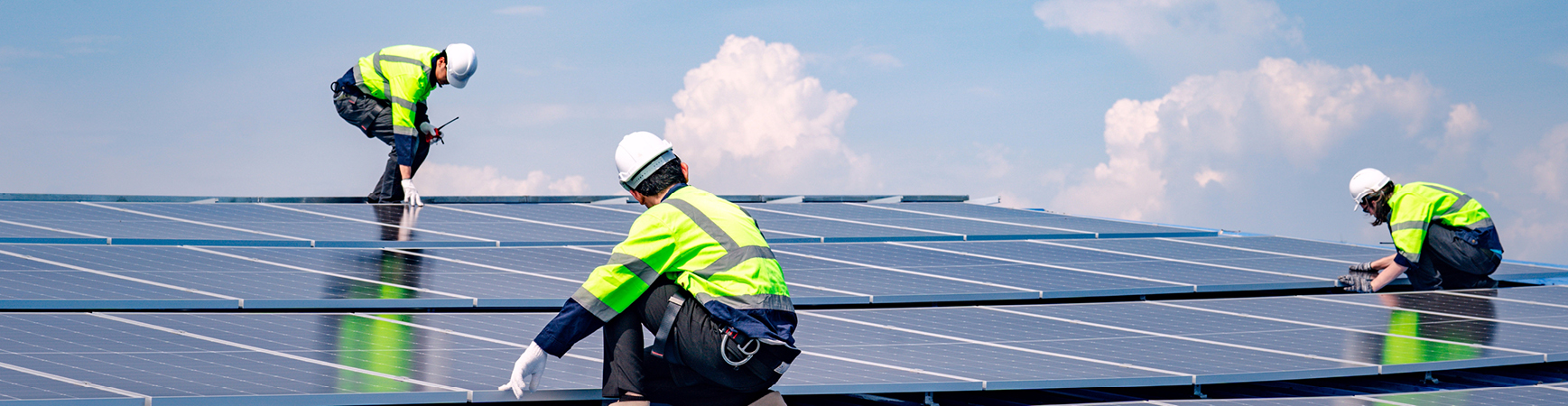
For tenants seeking the benefits of on-site renewable energy without the complexity of ownership, W. P. Carey can fund, design, install and maintain the solar system.
Our turnkey solutions allow tenants to access on-site solar with no upfront capital investment or operational responsibility. W. P. Carey will sell electricity generated by the system to the tenant, which can significantly reduce tenants’ utility expenses, provide greater energy price stability and support corporate sustainability objectives.
For example, in 2024, W. P. Carey entered into a power purchase agreement with an existing tenant, a healthcare products distributor, to fund and manage the installation of a roof-mounted solar system. The system became operational and began generating power in early 2025, offsetting approximately 90% of the building’s total power consumption. As a result, our tenant was able to significantly reduce its carbon footprint and utility costs without deploying upfront capital.
Community Solar: Unlocking Value from Tenant Rooftops
In addition to traditional solar, we can partner with tenants to develop community solar projects directly on their rooftops, transforming underutilized space into a shared renewable energy resource that generates power for the surrounding community. This energy is usually sold at a discount to both the tenant and local subscribers, reducing utility costs while also improving grid resilience and reliability. Another option is that tenants can receive Renewable Energy Certificates (RECs) from the system to offset their annual power consumption.
Rooftop community solar represents another way we deliver creative energy solutions that benefit tenants, communities and our portfolio. We recently entered into an agreement with our tenant, a grill manufacturer, to manage and fund the construction of a 6.1 MW rooftop community solar system at their leased facility. Upon completion, the solar installation is expected to generate enough power for an estimated 580 homes in the surrounding community.
Tenant-Owned Solar: Flexibility to Build, Own and Operate
W. P. Carey also offers tenants the flexibility to build and own on-site solar systems, giving them full control over their projects. We partner closely with tenants to enable solar development at their leased facilities, allowing them to customize system design, capture available economic incentives and seamlessly integrate solar into their broader energy strategy.
We supported our tenant, Sonae MC, on the installation of a 3.1 MW solar roof on their leased facility in Portugal. The solar roof offsets approximately 35% of the building’s annual consumption and thus significantly reduces the facility’s electrical power grid needs, helping Sonae save on energy costs.
A Partnership Approach to Energy Solutions
Solar is not a one-size-fits-all solution. Carey Tenant Solutions is designed to meet tenants where they are and evolve alongside their needs. By combining capital, real estate expertise and a long-term ownership mindset, we help tenants pursue practical, scalable energy solutions that support their long-term goals.

Related Topics:
You May Also Like:

Tenant Partnerships – The Road to a Sustainable Future
As Climate Week NYC approaches, the spotlight on sustainability is brighter than ever. For companies across industries, the annual event underscores the urgent need to address climate change. The real estate sector, estimated to be responsible for nearly 40% of global carbon emissions, plays a critical role in advancing this worldwide effort. At W. P. Carey, we recognize our potential to drive meaningful impact in the fight against climate change through our extensive portfolio of over 1,200 net lease properties. While the net lease model means our tenants have full operational control of their properties, we are committed to collaborating with them to achieve shared sustainability goals and enhance the quality of our properties. Here’s how: Gaining insights through data Collecting detailed energy data remains a core focus for us. Collaborating with our tenants to install IoT smart meter systems provides both us and our tenants access to high-quality utility data for their leased properties. This data can be utilized to assess energy usage for regulatory compliance as well as voluntary reporting. It also enables us to calculate the carbon footprint of our portfolio and identify opportunities to implement energy-saving measures at our properties. In 2023, we began a smart meter installation program with our European tenants, making the process more efficient for both W. P. Carey and our tenants while also reducing the risk of data errors. Renewable energy opportunities Renewable energy can reduce building operating costs and lower carbon emissions. One of the most accessible sources of renewable energy is solar power, which can be harnessed through the installation of solar panels. Particularly given the roof space that our industrial and warehouse assets provide, we believe we have a large addressable market for solar. Through W. P. Carey’s CareySolar® program, tenants have the opportunity to take advantage of rooftop and carport solar installations at their leased properties through a broad array of structures. These include: Landlord-operated Landlord-financed Tenant projects Rooftop leases W. P. Carey collaborates with each tenant to understand their current energy usage and determine the ideal solar solution for their unique property. In 2023, W. P. Carey extended the lease term with an existing tenant for their 265,000-square-foot industrial facility in Illinois. Simultaneously, we signed a 15-year power purchase agreement where we plan to build a 1,350-kilowatt roof mounted solar system that would offset 740 metric tons of CO2 annually. We will manage and fund the construction of the system and sell the power generated by the system to the tenant. Building energy retrofits Implementing sustainable features to improve energy efficiency has a huge impact on a property’s life-cycle emissions. W. P. Carey can do this through property-specific energy retrofits. An example of an energy retrofit is the installation of LED lighting. LED lights are 80% to 90% more energy efficient than other light bulbs and do not contain any environmentally hazardous materials. Additionally, LEDs last up to 25 times longer than traditional incandescent bulbs. In 2023, W. P. Carey completed a full LED retrofit at our 1.5 million-square-foot warehouse in University Park, Illinois. The LED project is expected to result in a 35% reduction in lighting electricity usage and 41% reduction in utility and maintenance bills at the property. Following the completion of the retrofit, we leased the property to Samsung for a term of 10.5 years. Green-building certifications Green-building certifications such as LEED and BREEAM can provide many benefits for both landlords and tenants. Achieving a green-building certification means that a property meets certain sustainability requirements across a variety of categories including energy, air quality and water usage. Certified buildings are typically more energy and cost efficient and create healthier work environments for employees. In addition to being more environmentally friendly, green-certified buildings can offer tax benefits. Many states offer tax incentives for green building projects, based on either energy savings or reaching a certain level of certification. Real estate studies have also shown that green buildings sell and lease faster than traditional buildings, and garner higher rents and lease rates. At W. P. Carey, we’re committed to achieving green-building certifications where we can, and our portfolio includes 6.6 million square feet of green-certified buildings as of June 30, 2024. In 2024, our state-of-the-art food research facility in the Netherlands received a BREEAM Outstanding certification, the highest level of BREEAM certification for buildings worldwide. Conclusion Reducing the carbon footprint of a net lease portfolio is an enormous challenge, but by bolstering tenant engagement and systematically identifying sustainability opportunities, progress is possible. Sustainable real estate is beneficial to the planet, attractive to tenants and improves the value of our broader portfolio, making it a win-win-win for all.

Forging Long-term Partnerships Through Tenant-centered Real Estate Solutions
At W. P. Carey, we view real estate as a long‑term partnership — not a one‑time transaction. We stay closely connected with our tenants, aligning our capital and real estate expertise with the evolving needs of their businesses. That philosophy is embedded in Carey Tenant Solutions™, our platform designed to support tenant growth beyond the initial acquisition. Through follow‑on investments, we help tenants modernize, expand, redevelop, relocate and improve the energy efficiency of their facilities — allowing them to focus capital on what matters most: running and scaling their core business. Below is an overview of the core capabilities within Carey Tenant Solutions and how each can benefit existing and prospective tenants. Build-to-suits In a build‑to‑suit, W. P. Carey funds and manages the construction of a new facility — or the expansion of an existing one — tailored to the precise specifications of a prospective or existing tenant. Upon completion, the tenant enters into a long‑term net lease while retaining full operational control of the new or expanded facility. We offer two flexible approaches to build‑to‑suits: Build-to-suit financing: We provide construction capital while the tenant’s developer executes the project, either through traditional construction financing funded over time or via take‑out financing upon completion. Turnkey build-to-suit: We finance and manage the entire construction process, from site selection to final delivery. For tenants, the primary advantage of a build‑to‑suit is capital efficiency. Rather than tying up their capital in real estate, tenants can redeploy resources toward growth initiatives, innovation or strengthening operations — while still gaining a facility designed specifically for their needs. Learn how this approach helped support our tenant Cuisine Solutions’ growth. Redevelopments W. P. Carey offers comprehensive redevelopment capabilities, managing projects from initial design through delivery. Combining our internal development expertise and long‑standing relationships with leading architects, consultants and contractors, we assemble experienced teams capable of executing even the most complex redevelopment projects. Our redevelopment capabilities span: Repositionings, where we upgrade, modernize or expand an existing building while maintaining its core use. Redevelopments, which involve unlocking value of infill locations through adaptive reuse and ground up construction of state-of-the-art, primarily industrial, properties that meet the demands of modern occupiers. W. P. Carey’s turnkey redevelopment process is comprehensive and includes: Pre-construction planning and optimization Development feasibility and due diligence Zoning and entitlement approvals Design and permitting Budgeting and scheduling Construction management Creative lease structures Sustainable development Overall efficiency Our proactive approach allows us to work directly with incoming tenants to shape a property around their exact operational requirements, while enhancing the quality of our portfolio by retaining the best positioned assets in the highest barrier-to-entry locations. Learn more about our carbon-neutral redevelopment of a Class-A warehouse for a global IT services company. Energy Solutions Through Carey Tenant Solutions, we also help tenants reduce operating costs and advance their sustainability goals by designing, funding and implementing renewable power and energy efficiency projects directly at their facilities. We believe that improving the quality and sustainability of our assets delivers tangible benefits across our portfolio — increasing renewal probabilities, strengthening tenant relationships and enhancing long‑term asset value – all while helping our tenants reduce their carbon footprint. Our energy solutions include: On‑site renewables, including CareySolar® Efficiency retrofits, such as LED lighting upgrades Smart building technologies, including IoT‑enabled metering Green infrastructure, such as EV charging stations and battery storage Carbon‑neutral construction By integrating these solutions into our long‑term ownership strategy, we help tenants operate more efficiently today while building assets that are better positioned for the future. Read how we collaborated with our tenant, a healthcare products distributor, to fund a rooftop solar installation. A Platform Built on Partnership Collaboration with our tenants — and support beyond the initial transaction — has always been core to how we operate at W. P. Carey. With Carey Tenant Solutions, we have formalized and unified those capabilities, bringing decades of experience together under a single platform to deliver one of the most comprehensive tenant service offerings in the net lease industry. Interested in exploring Carey Tenant Solutions? Get in touch today.

Here Comes the Sun!
Real estate, one of the largest contributors to carbon emissions, accounts for approximately 37% of the world's greenhouse gas emissions. This makes it a critical sector in the global effort to combat climate change. Fortunately, there are many solutions available to help reduce the carbon footprint of real estate, and one of the most impactful is solar power. This article discusses key benefits of installing solar panels for CRE occupiers. Save on the Cost of Power Solar panels allow buildings to generate their own electricity, reducing the amount of power tenants need to purchase from the grid. This is particularly beneficial for commercial real estate, where energy costs can be a significant expense for tenants. By installing solar panels, tenants can reduce energy bills, freeing up resources to reinvest in their businesses or operations. In addition, they can potentially earn revenue by selling excess power back to the grid through net metering programs. Hedge Against Utility Rate Increases The cost of energy varies and can rise unexpectedly due to factors like fuel costs or infrastructure maintenance. As a result, occupiers who rely solely on the traditional grid electricity for their power are subject to rate increases that can impact their operating costs. Based on data from the U.S. Energy Information Administration, electricity costs in the U.S. have increased by 2.28% on an annual basis from 2005-2020 and 7.08% since 2020. Through solar energy, companies can protect themselves against unplanned rate increases and stabilize their energy expenses. Solar panels can also reduce over-reliance on the grid during peak periods when the electricity demand is high compared to the supply. Moreover, solar panel systems have a long lifespan and require minimal maintenance. It means tenants can continue to benefit from the fixed cost of solar energy for many years, even as traditional grid electricity rates continue to rise. Reduce Carbon Emissions and Support Corporate Sustainability Goals Traditional energy sources, such as fossil fuels, produce greenhouse gas emissions that contribute to climate change. On the other hand, solar panels generate electricity using the sun, a renewable energy source that does not produce harmful emissions. Occupiers who install solar panels can minimize their carbon footprint and contribute to the wider goal of reducing greenhouse gas emissions. It can also help them achieve their corporate sustainability goals and align with the expectations of their stakeholders, including investors, customers and employees. Receive Renewable Energy Certificates (State Dependent) Tenants who install solar panels on their building can also receive Renewable Energy Certificates, or RECs, to offset carbon emissions. One REC is issued for every MWh of electricity generated and delivered to the grid by a renewable energy resource. The use of renewable energy, verified with RECs, ensures a company’s electricity is provided from renewable sources that produce low- or zero-emissions, thereby reducing the tenant’s market-based scope 2 emissions. Start Enjoying the Benefits of Solar with W. P. Carey Installing solar is one of the best things companies can do to shrink the carbon emissions of their buildings. If they lease their real estate, leveraging their landlord relationship is a great way to explore options for solar installation. W. P. Carey, a leading real estate investor with over 1,400 properties, recently launched its CareySolar program, a solution providing eligible tenants the opportunity to take advantage of rooftop and carport solar installations on their leased properties with no upfront investment. By embracing opportunities like this, companies can save money, reduce their carbon emissions and help the environment. Contact W. P. Carey today to learn more!